The Collar Rolled First: A Week in the $15 Polo Ralph Lauren White Polo
We laid the $15.37 white Polo Ralph Lauren polo flat against our size template, wore it for a week and washed it twice at 30 degrees. The collar moved; the placket did not.
Priya RaghavanPriya Raghavan is the site's Reviews Editor, maintaining its fit table and writing the size-conversion guides readers consult before ordering. Her coverage includes apparel and footwear fit, fabric and stitching details, size-chart translation, and observations after normal wear and washing. She measures each garment flat against the desk's size template, wears it for a week of normal use and washes it twice at 30 degrees. Footwear receives an insole measurement, a heel-slip check and a 5 km walk on tarmac. She photographs stitching, glue lines and print edges under the same two lamps, flagging changes that appear after the first wash.
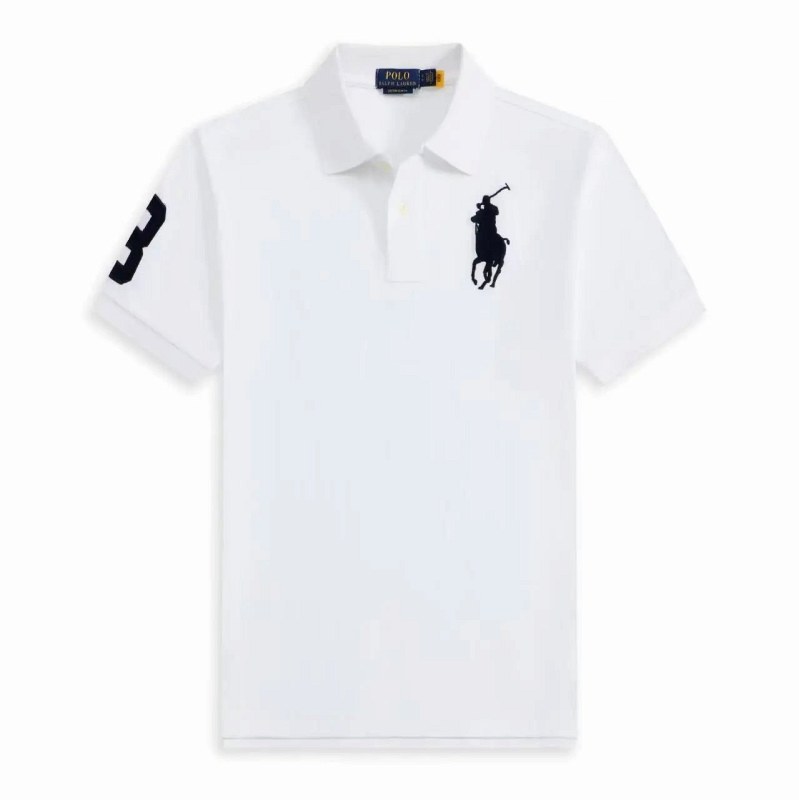
Hands-on score 4.0 / 5
Editor verdict
A fitted, light white polo with clean embroidery and a patch that survived two washes. The fused collar curled within days and the listing contradicts itself on fabric, so confirm both before ordering.
What works
- Fitted cut and short sleeve that hold their shape in wear.
- Dense chest embroidery and a square, evenly stitched sleeve patch.
- Survived two 30-degree washes with no colour transfer or greying.
Watch-outs
- Collar tips curled by day four and needed pressing after washing.
- Listing names cotton as the main fabric and polyester as the fabric name.
- Thin body shows embroidery backing under backlight.
Buyers who want a trim, short-sleeve white polo for warm weather and will confirm the fit line and fabric content with the seller first.
Anyone after a relaxed classic-fit polo, or anyone unwilling to chase measurements and tag photos before paying.
The white polo is the easiest garment in menswear to ruin and the hardest to fake convincingly. At $15.37, this one arrives with an equestrian motif on the chest, a contrast patch on the right sleeve and a list of nine colourways. We ordered the white in size M, measured it on the mat, wore it for a week of ordinary days and put it through two 30-degree washes. The collar was the first thing to change.
Laid flat against the size template
Our template sits between a slim and a classic cut, so the numbers below are the ones that decided the size recommendation. All measurements are from the size M sample, laid flat, unwashed.
| Measurement | Size M, flat | Note |
|---|---|---|
| Chest, pit to pit | 51 cm | 22 cm of ease on a 96 cm chest, closer to a slim line |
| Length, high point shoulder | 70 cm | Ends mid-fly on a 178 cm frame |
| Shoulder, seam to seam | 43 cm | Sits on the shoulder bone, no drop |
| Sleeve, from shoulder seam | 20 cm | Ends above the bicep |
| Hem, flat | 51 cm | Straight, no side vents |
| Weight | 214 g | Light for a polo; the listing's weight field was blank |
The cut is genuinely fitted through the chest and waist, and the sleeve is short and narrow. It reads as streetwear rather than clubhouse, which matches how the listing frames it. If you want the relaxed, boxy polo look, this is not the pattern for it.
The collar was the weak point
Out of the bag, the collar had a clean roll and the points sat flat. It is a fused two-piece construction rather than a knitted self-collar, and that showed up in wear. By day four, the tips had lifted and started to curl upward, most obviously on the side worn against a bag strap. After the first wash the roll softened further and the collar needed pressing to sit flat again.
The placket, by contrast, held up well. It is a clean three-button front, the buttonholes are dense and the buttons are two-hole with a visible rim. We counted eight stitches per button and found no loose threads at the placket edge on our sample. The body seams are overlocked and flat, and the armhole join sits without puckering.
The motif and the sleeve patch under a lamp
We photographed the chest embroidery and the right-sleeve patch under the same two lamps we use for every garment, then again after each wash. The equestrian motif is dense and well registered: legs, tail and reins are distinguishable at arm's length and the outline did not fray. On the white body, backlighting shows a faint shadow of the embroidery backing through the fabric, which is what you would expect from a thin cotton body and does not read at normal viewing distance.
The contrast patch is the detail worth checking on arrival. On our sample it sat square to the sleeve seam with even stitching on all four sides; a crooked patch is the fastest visual tell that a polo was assembled in a hurry. If you order through an agent, ask for a close-up of that patch in the QC photos before the parcel ships.
Two washes at 30 degrees
Both washes were 30 degrees, low spin, hung to dry away from direct sun. The white did not pick up grey and nothing bled into it from the motif or the patch. Whiteness was unchanged against an unworn offcut, and the body needed no ironing beyond the collar. Drying was quick, noticeably quicker than a heavyweight pique polo, which supports the suspicion that the body is not pure cotton.
That suspicion comes straight from the listing: it names cotton as the main fabric component and polyester as the fabric name in the same block. Our sample feels thin, dry and slightly crisp rather than looped and soft, and it has no pique mesh texture to speak of. It is comfortable in heat and it is machine washable, but we are not going to call the composition either way when the seller has not.
Fit lines are the real buying decision
Polo Ralph Lauren does not use one sizing convention. Published comparisons put the slim line roughly 1.5 inches trimmer through the body and 1.5 inches shorter than classic at the same label size, and Chinese-market write-ups describe classic as one to two sizes larger than slim, with the golf cut larger again. Our sample behaves like the slim end of that range. Ask the seller which line this is and request a chest measurement before you choose, because a size M in a classic pattern would fit very differently from the M we measured.
Counterfeit RL polos are common enough that the checks are worth doing. The often-cited tells are a garment labelled small that fits like a tent, misaligned pattern at the seams, and label or tag inconsistencies. Request tag photos with the measurements.
How it wore over the week
Three days of commuting, one evening out and a garden afternoon. No pilling under the bag strap, no seam failure, no visible thinning at the elbow. The fitted body stayed tucked without billowing, and the short sleeve kept its shape. The one loose hem thread we found at the side seam was trimmed and did not return after either wash. Long-term owners of RL polos report holes where the label is stitched and navy turning purple over time; we cannot test either in a week, and this sample is white, so the fading question stays open.
How we tested
Size M measured flat at 51 cm pit to pit and 70 cm long, 214 g on our scale. Worn a week, washed twice at 30 degrees, hung dry. Collar tips curled; placket, motif and sleeve patch held. Fabric content still unconfirmed.
Sources and notes
- Catalog product page
Product listing verified on 2026-10-19.
Did the polo shrink after two 30-degree washes?
Our size M lost no measurable length or chest width across two low-spin washes, hung dry. We did not tumble dry it, and we would not: the thin body and fused collar are the parts most likely to move under heat.
Should I size up for a looser look?
Yes, if you want ease. Our M measured like a slim line at 51 cm pit to pit. Confirm which fit line the seller is shipping first, because a classic-cut M runs roughly one to two sizes larger.
How white is the white, and does the motif bleed?
It is a clean optical white with no cream cast. Neither the chest embroidery nor the sleeve patch released colour into the body in two washes. We have not tested it against chlorine or prolonged sun.