Tiffany Co Jewelry QC: Check Engravings, Clasps, Size
When buying a piece of jewelry with a Tiffany & Co. style mark, QC photos help buyers confirm the appearance of the item actually being shipped, but they cannot alone prove authenticity, material, or long-term durability. This guide only discusses one specific sample: a black ring with the page title Tiffany & Co. Black Everyday Ring With a Wrapped-Knot, Half-Diamond Motif. The page mentions a wrapped-knot design, half-diamond decoration, and plati
Marcus LindqvistMarcus Lindqvist is the site's Editor in Chief, approving every order sheet and writing most of its shipping-line comparisons. His coverage includes agent fee structures, freight-line selection, customs and duty information, and QC photo checks. He approves the order sheet before checkout, then records checkout-to-warehouse, QC photo turnaround and line-handover times to the hour. He weighs and measures every parcel before opening it, films the unboxing on a fixed tripod, and checks fee and duty calculations against the actual invoice two weeks after arrival.
Editor score 4.2 / 5
Insight
When buying a piece of jewelry with a Tiffany & Co. style mark, QC photos help buyers confirm the appearance of the item actually being shipped, but they cannot alone prove authenticity, material, or long-term durability. This guide only discusses one specific sample: a black ring with the page title Tiffany & Co. Black Everyday Ring With a Wrapped-Knot, Half-Diamond Motif. The page mentions a wrapped-knot design, half-diamond decoration, and platinum and thick gold plating, but there are still detail differences between the product title and description that need to be confirmed with the seller. 🧐
The goal of this article is to help you complete a reviewable QC photo check before placing an order: confirm that the photos match this item, observe engravings, clasps or connection points, surface finish, size references, and obvious flaws, and pause the order when evidence is insufficient. Details not shown in the photos should not be inferred as "no problem."
Clarify the tiffany co jewelry QC verification task and evidence boundaries
This verification only revolves around the black wrapped-knot ring. The focus is not on whether it is authentic, but on whether the current photos are sufficient to support the following decisions:
- Whether the photos indeed correspond to the target product, not a category image, main image, or another similar style.
- Whether the black appearance, knot structure, inlaid areas, and surface finish are roughly consistent with the product page description.
- Whether engravings, inner ring, edges, connection points, and decorative areas are clear enough to continue asking the seller.
- Whether the photos provide enough size reference for the buyer to know what additional measurement data is still needed.
- Whether there are obvious problems that require additional photos, exchange, or postponing payment.
QC photos can only prove the condition visible in the images. They cannot prove metal composition, plating thickness, diamond material, brand authenticity, wearing comfort, or after-sales results. The page also notes that the size and fit of the specific item are not fully listed, so the visual proportions in the photos cannot be taken as exact dimensions. ⚠️
Confirm the specific style and current page status from the fashionreps product detail page
When checking, you should first open the product detail page, verify the product name, images, description, and current page status, then look for the entry explicitly labeled View QC Photos on the page. Do not guess the QC address from search results, category pages, brand pages, or other product pages, and do not treat another product's gallery as evidence for the current order.
This sample's page information contains several checkpoints to retain:
- The product title points to a black everyday ring.
- The description mentions a wrapped-knot design, half-diamond decoration, and platinum and thick gold plating.
- The page does not provide complete ring size, inner diameter, or resizing conditions.
- The page suggests requesting close-up photos of the actual item before purchase.
- The product price is reference information; the final product price, service fees, and international shipping costs should be based on the shopping agent platform's checkout page.
The page summary indicates an update date of September 26, 2026. Prices, inventory, image status, and purchase processes may change. This article was verified on October 22, 2026; if you order on another date, reopen the product page and QC entry to confirm. 💡
Access the real QC gallery for the corresponding product via View QC Photos
After entering the product detail page, click View QC Photos within the page. The correct gallery should lead back to the same black wrapped-knot ring, not just brand-related products or generic jewelry images.
You can confirm the image correspondence in the following order:
- First look at the product shape in the gallery to confirm it is still a ring, not a bracelet, necklace, or another ring style.
- Compare the wrapped-knot structure to confirm the knot position, protrusion direction, and half-diamond decoration area are consistent.
- Check if the images include multiple angles, close-ups, and inner ring views; with only a single distant shot, engravings and edge conditions usually cannot be judged.
- Note whether the images show the actual product, or only packaging, product main images, or seller promotional images.
- Save the page context corresponding to the images to avoid mixing QC photos of different products.

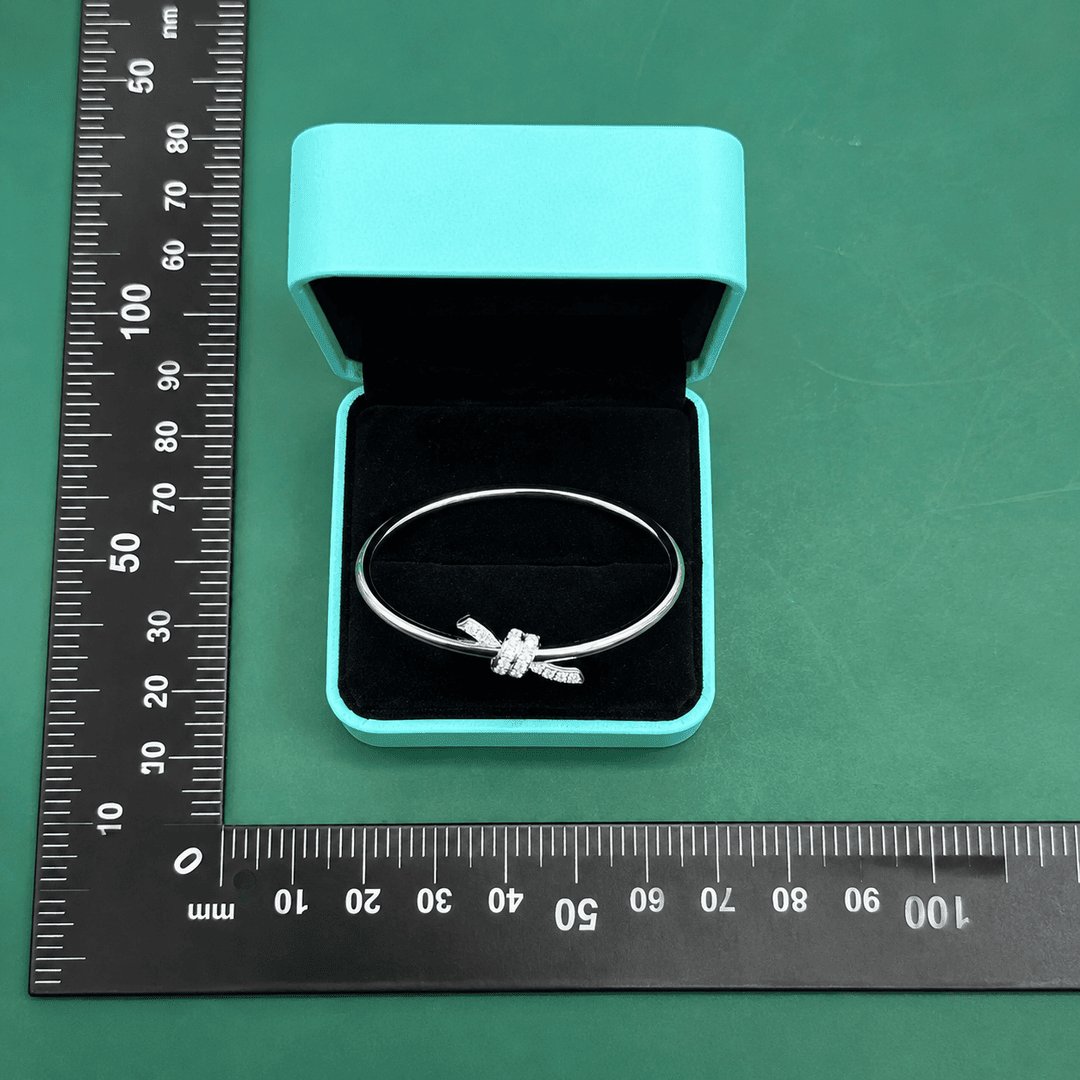
The image shows the sample corresponding to the product's QC evidence page. The image itself can only be used to observe appearance information that actually appears in the actual picture; details that cannot be confirmed from thumbnails, missing angles, or blurry areas should be listed as pending evidence, not directly judged as acceptable. The image source is the corresponding product's QC gallery, and when used, its product correspondence and original page record should be retained.
Check engravings, clasps, connection points, and visible surface details
Although the ring does not have traditional clasps, "clasps and connection points" can be extended to the knot overlap areas, the connection between decoration and ring band, inner ring edges, and any possible seams.
Engraving check
First confirm whether the photos can clearly show the inner ring or designated engraving location. What needs to be observed is whether letter spacing, direction, and depth are uniform, and whether the engraving shows obvious breaks, skew, or blurriness. If the inner ring is completely invisible, do not write "no engraving" or "engraving normal"; only record as "cannot verify from current photos." Engraving appearance alone cannot serve as a basis for authenticity.
Knot and connection points
Observe whether the two structures of the wrapped-knot overlap naturally, and whether the knot edges have obvious misalignment, burrs, cracks, or asymmetry. The half-diamond decoration area should be checked for obvious gaps, skew, vacancies, or abnormal mounting edges, but only when the photos are close enough and lighting does not cause obstruction is it appropriate to raise specific questions.
Color and surface finish
The black appearance should maintain observational consistency, focusing on whether edges show abrupt discoloration, base exposure, mottling, or obvious color difference. Reflections, shadows, and camera white balance can alter color judgment, so you cannot assert plating abnormality based solely on a dark or warm photo. The product page mentions platinum and thick gold plating, but this is page information, not proof of material composition from QC photos.
Stitching, prints, and flaws
Stitching and prints are not the main structural features of this ring. If the photos do not include packaging, pouches, or accessories, you should not forcibly evaluate their stitching or prints. Focus on the ring band edges, knot intersections, decoration areas, and inner ring. Observed flaws should describe location and visibility, such as "there is a suspected scratch on the outer knot edge, current resolution insufficient to confirm," not directly use conclusions like "serious flaw" or "quality assurance."
Record size information using page specifications and photo references
Photos can only provide proportional reference, not replace the seller's precise measurements. Before ordering, it is recommended to confirm with the seller or shopping agent:
- Inner diameter or ring size, preferably with millimeter measurements.
- Ring band width, and the maximum height of the wrapped-knot protrusion.
- Length and width of the decoration area.
- Whether resizing is possible, and whether resizing affects the knot or inlaid areas.
- Whether measurements are actual finished product measurements or based on template markings.
You can use a coin of known size, a ruler, or a standard measuring tool as a reference, but the reference object must be in the same plane as the ring, and photos should avoid strong perspective angles. If the photos do not have a reliable reference object, you can only judge approximate proportions, not select a ring size based on that. 📏
Size records should separate page information, seller measurements, and editorial judgment:
| Information category | What can be recorded | What should not be over-inferred |
|---|---|---|
| Page information | Style, decoration, plating description, and reference price stated on the page | Actual metal composition, authenticity, and exact size |
| QC photos | Color, structure, edges, and surface condition clearly visible in photos | Inner ring not in photos, weight, feel, and durability |
| Seller supplementary data | Inner diameter, width, height, resizing conditions, and more angles | Unprovided measurement results or after-sales promises |
| Editorial judgment | Whether additional photos, inquiries, or postponing order is needed | Authenticity guarantee, quality assurance, or final wearing effect |
Distinguish between visible photo facts, product page information, and editorial judgment
To avoid writing speculation as fact, you can use a three-layer recording method.
The first layer is visible photo facts, such as "the photo shows a black ring band and a protruding knot structure" and "the current image does not show inner ring engraving." The second layer is product page information, such as "the page description mentions half-diamond decoration and platinum and thick gold plating." The third layer is editorial judgment, such as "since there is no clear inner ring photo, it is recommended to request additional photos before deciding."
These three layers cannot replace each other. The product page stating a certain material does not mean QC photos have proven the material; seeing reflections in photos does not mean confirming plating thickness; feedback about other Tiffany Knot rings in forums cannot be directly applied to this sample. The page's public information mentions that some buyers find the Knot shape soft, and others report that the prongs of another diamond Knot ring may snag clothing; these are discussions at other styles or series levels, not actual measurement conclusions for this product.
Stop conditions when photos are missing, blurry, or cannot correspond to the product
In the following situations, you should pause the order or request additional evidence, rather than using main images instead of QC photos:
- The View QC Photos entry cannot be opened, or after opening there are no actual photos of the ring.
- Photos only show packaging, distant shots, or partial views, making it impossible to confirm product identity.
- The inner ring, knot connection points, and decoration areas are always in shadow or out of focus.
- The style in the photos is inconsistent with the product title, making it impossible to confirm it is a ring or other jewelry.
- There are obvious differences between the page description and the photo appearance, such as description of half-diamond knot but photos showing a plain band without decoration.
- The seller refuses to provide inner diameter, size reference, or key angles, and the page lacks sufficient specifications.
Stopping does not necessarily mean the product has a problem, but that current evidence is insufficient to support a purchase decision. For discrepancies between product title, description, and photos, first request confirmation of the specific style, color, decoration, and surface finish. 🛑
Organize additional photo requests, return/exchange inquiries, and pre-order action checklist
You can write additional photo requests specifically and briefly:
- Please provide a close-up front view of the inner ring of the actual item to confirm engraving or inner ring condition.
- Please provide close-ups of the wrapped-knot overlap area, decoration area, and both left and right sides of the ring band edges.
- Please measure inner diameter, ring band width, and highest protrusion with a millimeter ruler, and show both the ruler and ring in the same photo.
- Please confirm whether the black appearance, decoration count, plating description, and product title in the photos correspond to the same style.
- If scratches, discoloration, gaps, or obvious skew are found, please confirm before payment whether exchange is possible, and the applicable return/exchange window and costs.
Pre-order action checklist:
- Accessed View QC Photos from the product detail page.
- Confirmed that QC photos correspond to the black wrapped-knot ring, not other products.
- Recorded visible photo facts, page information, and personal judgment separately.
- Obtained inner diameter, width, and necessary height measurements.
- Confirmed that current price is only reference, and final cost is based on the shopping agent platform's checkout page.
- Read applicable return/exchange conditions and retained page and additional photo records.
- When still uncertain about engraving, material, authenticity, or size, do not treat photos as a guarantee.
This set of checks is suitable for buyers who need to verify actual appearance, size, and obvious flaws before payment, especially when page specifications are incomplete, style descriptions differ, or they need to decide whether to continue requesting additional photos. It is not suitable for authenticating, proving precious metal composition, guaranteeing wearing comfort, or predicting long-term durability. What can be saved is mainly communication and return/exchange costs caused by size mismatch, style mismatch, or obvious appearance issues; the added risks are that additional photos may still be incomplete, photos may have color differences from the actual item, and cross-border returns may involve time, shipping, and handling restrictions. If the seller cannot provide clear QC photos and basic measurement data for the corresponding product, the safest decision is to postpone purchase.